
Navigating the world of CACFP meal patterns can feel like a constant guessing game. Are those chicken nuggets creditable? Is that yogurt the right portion for a four-year-old? To take the guesswork out of compliance, check the USDA Food Buying Guide (FBG). This isn’t just a list—it is the definitive resource for ensuring every meal you serve meets federal standards while protecting your program from audit findings
CACFP Approved Food List Tool #1- The USDA CACFP Food Buying Guide
Do you have questions about what foods are allowed in the CACFP? The Food Buying Guide is an invaluable resource to help you navigate these questions. Organized by the USDA—this guide provides everything you need to ensure compliance with the CACFP.
What the Food Buying Guide Helps You Do
The FBG is more than a “CACFP approved food list.” It helps you:
- Confirm creditable foods for CACFP meals and snacks
- Serve the correct portion sizes by age group and program type
- Calculate how much to buy (so you don’t under-purchase or waste food)
- Reduce audit risk by documenting how foods meet meal pattern requirements
This guide is essential for ensuring that the meals you serve are both nutritious and compliant with CACFP regulations.
How to Check if a Food is on the CACFP Approved Food List (Is it Creditable?)
Use this quick method to find most items fast:
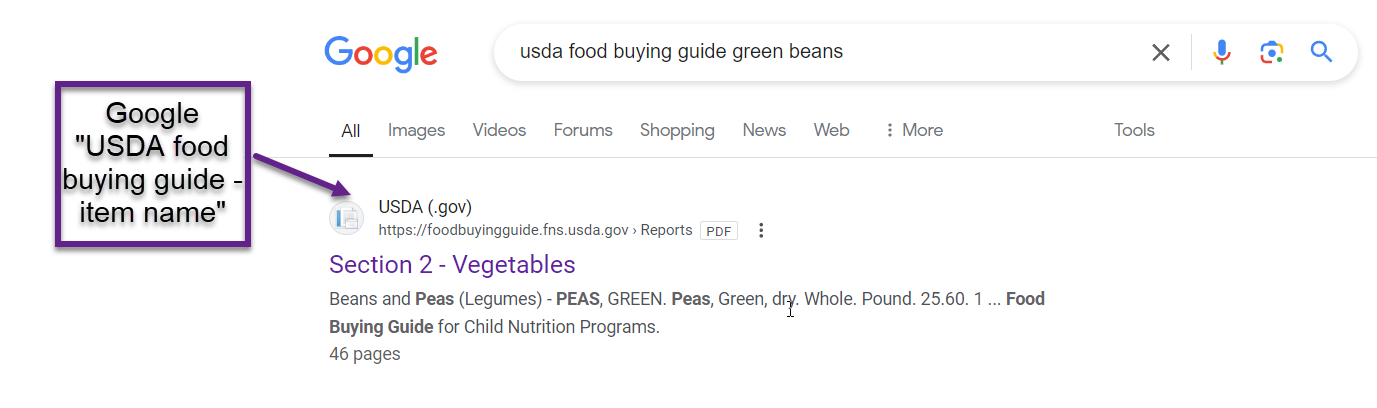
- Google: “USDA Food Buying Guide (+item name)” — or go straight to the official Food Buying Guide tool.
- Click on the official Food Buying Guide result.
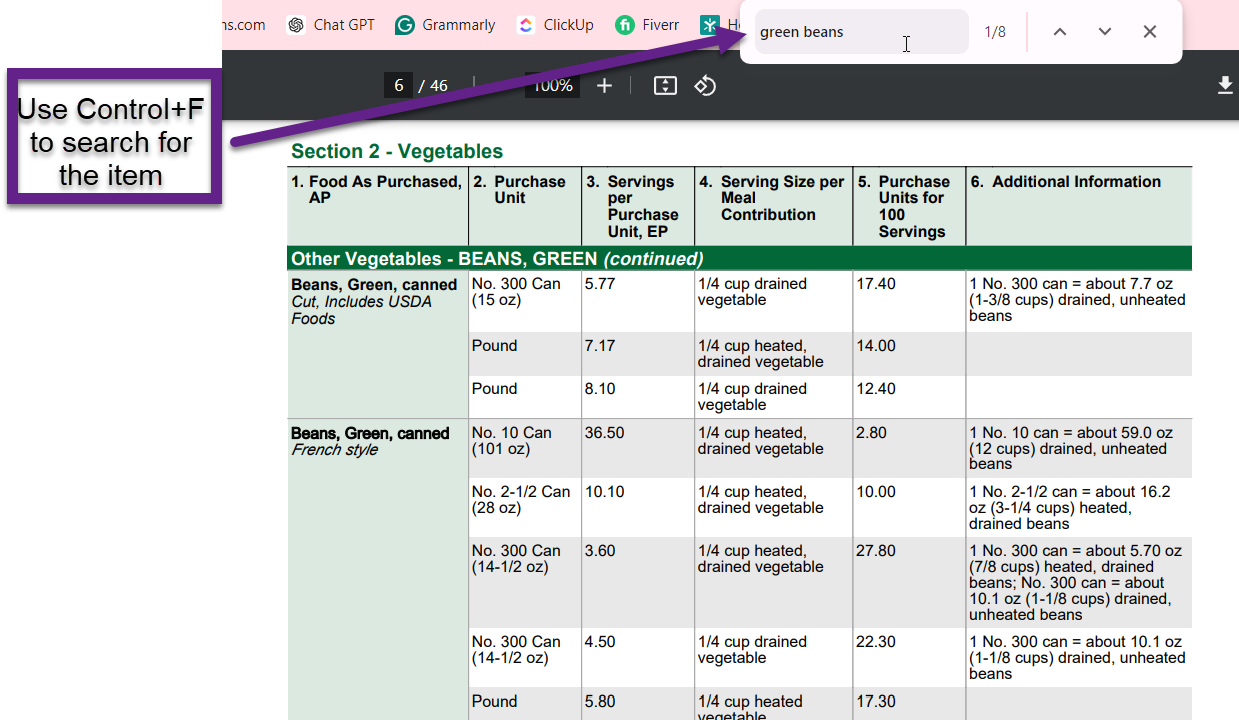
- Use Ctrl + F (Command + F on Mac) to search the item name.
What’s Inside the Food Buying Guide (FBG)
1) Meal Pattern Requirements
The Food Buying Guide includes detailed charts that outline the specific food quantities required for different programs. This ensures that every meal you serve meets the nutritional standards set by the USDA.
2) Yield Data (Over 2,100 Food Items)
With yield information for over 2,100 food items, the FBG helps you determine how much food you need to buy and how each food item contributes to meal pattern requirements. This data is crucial for preventing food waste and controlling costs.
3) Practical Examples of CACFP Approved Food
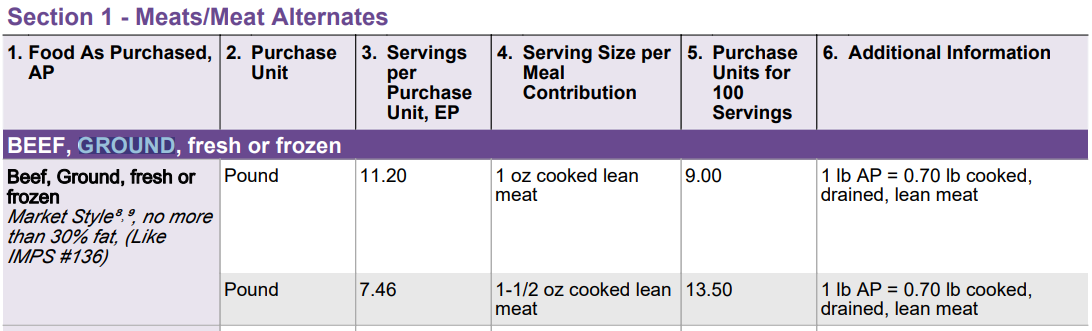
The guide is filled with practical examples to help you apply yield data to your specific needs. Whether you’re figuring out how many pounds of tomatoes to buy for a salad or calculating the amount of ground beef needed for meatloaf, the FBG has you covered. See below for a screenshot of what the results look like.
4) Appendixes & Bonus Tools
The appendixes include extra resources like:
- Helpful references for documenting crediting and compliance
- Recipe Analysis Workbook
- Guidance on using the CN Labeling Program
How the Food Buying Guide is Organized (6 Main Sections)
The FBG is organized into six main sections, each focusing on a different food category:
1. Meat/Meat Alternates
This section includes options such as beef, poultry, fish, eggs, tofu, beans, and cheese. It specifies the amount of each food that needs to be served to meet the protein requirements for different age groups.
2. Vegetables
Vegetables are a crucial part of any CACFP-compliant meal. This section outlines the various types of vegetables that can be served—whether fresh, frozen, or canned—and helps you determine the correct serving size.
3. Fruits
Fruits are an essential component of a balanced meal. The guide provides information on a wide range of fruits, including fresh, frozen, dried, and canned options, along with portion sizes needed to meet CACFP guidelines.
4. Grains
This section helps you choose the right grains, including bread, pasta, rice, and cereals. It also includes whole grain-rich criteria and the correct portions needed to meet meal pattern requirements.
5. Milk
Milk is a critical part of CACFP meals, providing necessary nutrients like calcium and vitamin D. The guide explains the types of milk that are allowed and the appropriate serving sizes for various age groups.
6. Other Foods
This section covers additional foods that may be included in meals, such as condiments, oils, and other miscellaneous items. It provides guidance on how these foods can be incorporated without exceeding dietary guidelines.
Why the CACFP Approved Food List Matters
The Food Buying Guide is more than just a CACFP approved food list—it’s a practical tool that can help you:
- Plan Menus: Ensure that any particular food item is allowable and that your menus are balanced and meet all CACFP meal pattern requirements.
- Ensure Compliance: Reduce the risk of non-compliance issues by adhering to CACFP standards, including noting that for most items the as purchased amount is less than the creditable serving amount.
- Save Time and Money: Control costs and reduce waste by knowing exactly how much food to buy and serve.
Tips for Using the Food Buying Guide
- Start with the Basics: Familiarize yourself with the sections most relevant to your situation and needs.
- Use the Online Tools: Take advantage of the interactive tools available online to streamline your menu planning.
- Stay Updated: Regularly check for updates to the CACFP approved food list to ensure compliance with the latest standards.
The CACFP Food Buying Guide is an indispensable resource for participating in the CACFP. By understanding how to navigate this guide, you can confidently serve nutritious, compliant meals that meet the needs of the children in your care.
CACFP Approved Food List Tool #2- The CN Label Verification Report
What is a CN Label?
CN labels are required for most frozen or prepared items. Examples of CN label food include beef patties, cheese or meat pizzas, chicken nuggets, corn dogs, fish sticks, meatballs, and lasagna.
To learn more about CN labels, check out this article by the Institute of Child Nutrition.
Example of A CN Label
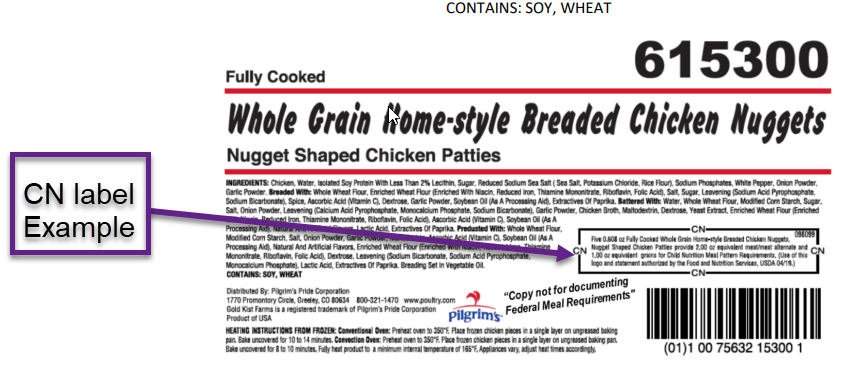
A CN (Child Nutrition) label provides information on how a product contributes to the meal pattern requirements set by the USDA. Manufacturers submit their products to the USDA to receive a CN label, which makes menu planning easier and ensures compliance during program reviews.
How to Verify CN-Labeled Products
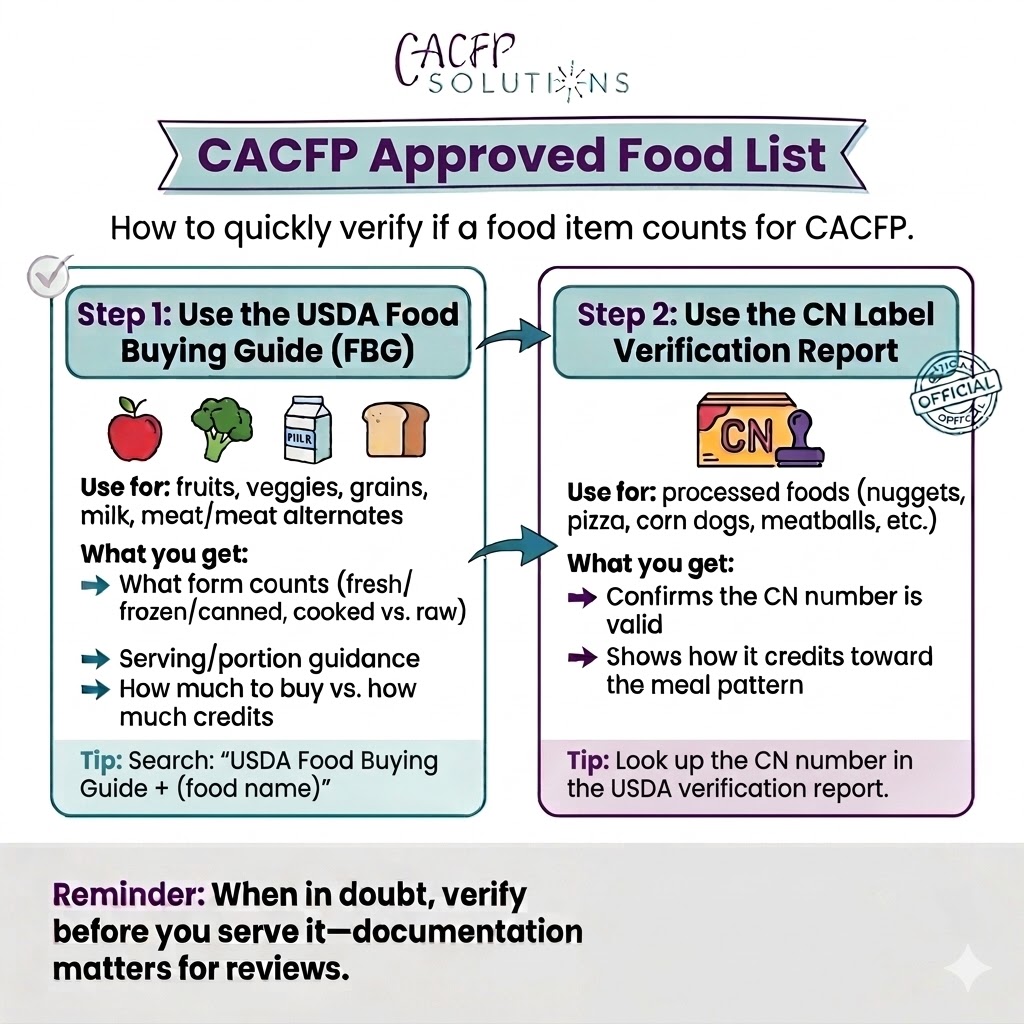
USDA publishes a CN Label Verification Report each year. This list confirms whether a CN label number is valid and provides a directory of approved CN-labeled products.
Checking the CN Label Verification Report helps you:
- Confirm your product’s CN number is valid
- Reduce review findings tied to processed foods
- Keep documentation audit-ready
Need Help with CACFP Approved Foods, Menus, or Documentation?
Keeping up with CACFP crediting rules can be time-consuming—especially when you’re managing a full center.
CACFP Solutions can help you:
- Verify foods and crediting documentation
- Build compliant menus and meal production records
- Reduce paperwork and stay audit-ready
- Streamline receipt and expense tracking with our AI-powered tools
If you want help making CACFP easier (and less stressful), reach out to our team.
Are you looking for vendors to purchase CACFP approved products? Check out our article on Top Food Distributors for CN Label Products.
Frequently Asked Questions About the CACFP Approved Food List
Is there an official CACFP approved food list?
The USDA Food Buying Guide (FBG) is the primary tool for confirming which foods are creditable in the CACFP. It includes meal pattern requirement charts, yield data for over 2,100 food items, practical examples, and appendixes with crediting resources.
How do I check if a food is creditable in the CACFP?
A quick method: search Google for “USDA Food Buying Guide” plus the item name, click the official Food Buying Guide result, and use Ctrl + F (Command + F on Mac) to search for the item name.
How is the USDA Food Buying Guide organized?
The Food Buying Guide is organized into six main sections, each focusing on a food category: meat/meat alternates, vegetables, fruits, grains, milk, and other foods.
What is a CN label?
A CN (Child Nutrition) label provides information on how a product contributes to the meal pattern. CN labels are required for most frozen or prepared items — examples include beef patties, cheese or meat pizzas, chicken nuggets, corn dogs, fish sticks, meatballs, and lasagna. Our guide to vendors carrying CN label products covers where to source them.
How do I verify a CN-labeled product?
USDA publishes a CN Label Verification Report each year. This list confirms whether a CN label number is valid and provides a directory of approved CN-labeled products, which helps reduce review findings tied to processed foods.
Related CACFP Resources
Crediting is one piece of a compliant program. These cover the rest:
- The CACFP unallowable food list — what you can’t serve
- CACFP snack requirements — components and portions
- The 2026 whole milk rule change — updated milk options by age
- Point-of-service meal counts — documenting what you served
- Admin review tip sheet — the records reviewers ask for
If crediting and menu documentation are eating your week, our monthly CACFP services handle menus, meal production records, and claims for you — or book a one-off consultation if you just need a specific question answered.